


Shenzhen Dallast Technology Co ., Ltd. is a hydraulic cylinder manufacturing enterprise integrated with professional designing, production, and sales. The company after decades of precipitation process, has a mature R&D to production process, technology research, and development capabilities to lead the company's business development capabilities.

01
Rich Product Variety
The company focuses on and specializes in the production of various types of hydraulic cylinders, including dump truck hydraulic cylinders; engineering cylinders; agricultural cylinders; telescopic cylinders; small hydraulic cylinders, welding cylinders and hydraulic lifting cylinders, etc.
02
Wide Range of Product Uses
Our products can be widely used in many fields such as dump trucks, dump trailers, garbage trucks, excavators, loaders, forklifts, cranes, ships, mining machinery and fire trucks.
03
Quality Assurance
Our products will undergo many tests such as trial run test, start-up pressure test, pressure resistance test, leakage test, full stroke test, etc. before delivery; each hydraulic cylinder will be tested and will not be shipped until it passes various tests.
04
Leading Service
We have many years of industry experience and a complete production management, quality supervision, sales service operation system. Whether you want to buy a dump truck hydraulic cylinder or an engineering cylinder, just send your requirements by email and we can customize the product for you.
-
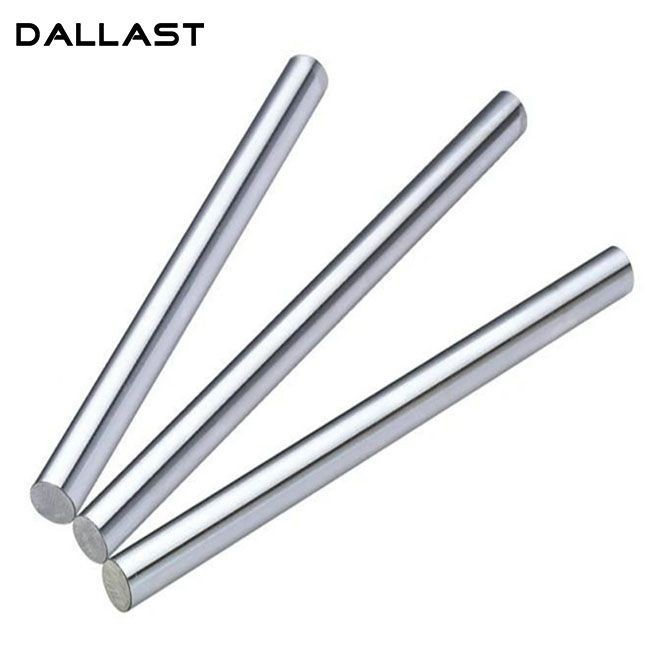
![Stainless Steel Bars and Rods]() Stainless Steel Bars and RodsDALLAST supply good quality stainless steel bars and rods, available material you can choose or as your required.read more
Stainless Steel Bars and RodsDALLAST supply good quality stainless steel bars and rods, available material you can choose or as your required.read more -
![Stainless Steel Round Bars]() Stainless Steel Round BarsWe have experienced technology engineers and skilled workers and provide you with high quality and efficient products. The most advanced inspector to ensure the quality.read more
Stainless Steel Round BarsWe have experienced technology engineers and skilled workers and provide you with high quality and efficient products. The most advanced inspector to ensure the quality.read more


What is Stainless Steel Bars
Stainless bars boast a range of highly valued characteristics, but by far the most important of these is the one that gives the alloy its ‘stainless’ name: corrosion resistance. This is achieved through the alloying process - stainless steel is a metal alloy whose chief constituents are iron and chromium, and to qualify as stainless steel, the metal must contain no less than 10.5% chromium. Other common ingredients generally present at varying percentages in stainless steel include silicon, carbon and manganese.
Features of Stainless Steel Bars
Corrosion Resistance
Stainless steel’s inherent resistance to corrosion ensures that round bars maintain their integrity even in challenging environments. This makes them an ideal choice for projects where exposure to moisture, chemicals, or extreme temperatures is a concern.
High Strength and Durability
The robust nature of Stainless Steel Bars, coupled with their high tensile strength, guarantees structural stability and durability. This quality is particularly crucial in applications where the material is subjected to heavy loads or stress.
Aesthetic Appeal
In addition to their utilitarian attributes, Stainless Steel Bars contribute to the aesthetic appeal of structures and products. Their smooth, polished surface enhances visual appeal, making them suitable for architectural elements and design-oriented projects.
Low Maintenance Requirements
Stainless steel’s low maintenance requirements make Stainless Steel Bars a cost-effective choice in the long run. With minimal susceptibility to wear and tear, these bars alleviate the need for frequent replacements, reducing overall project costs.
Ferritic Stainless Steel
Ferrite is the primary structure, and this type of stainless is primarily made of just iron and chromium. It’s cheap and it handles high temperatures well (it’s resistant to Stress Corrosion Cracking aka SCC) and can be hardened by heat treating depending on the grade.
Martensitic Stainless Steel
Martensite is the primary structure. It’s heat treatable and strong. The corrosion resistance is moderate. This stuff machines well but is terrible for welding and forming.
Precipitation Hardening (PH) Stainless Steel
Precipitation hardening is actually a really cool and complicated process, and I’m working on putting together an article that explains it simply. I’ll post a link here when I’m done. This is, in my nerdy opinion, the most interesting kind of stainless. This stuff is an absolute workhorse of the stainless world. They can typically take 3-4 times the strain of 304 stainless. This is because they’re made with nickel plus some other elements to fine-tune the characteristics.
Duplex Stainless Steel
They’re used when higher strength is needed, but you also have to have a higher corrosion resistance. It’s another kind of high-performance, exotic metal. You can have lean-duplex, standard-duplex, and super-duplex.
Process of Stainless Steel Bars
Material Selection
The first step is the selection of the appropriate raw materials. The type of stainless steel used depends on the specific application, and factors such as corrosion resistance, strength, and durability are taken into consideration.
Melting
The selected raw materials are melted in a furnace, where they are heated to a high temperature until they become molten. The molten steel is then poured into a mold to form a billet.
Hot Rolling
The billet is then heated to a temperature above its recrystallization temperature and passed through a series of rollers to form a long, thin bar. This process is called hot rolling, and it results in a round bar with a rough surface.
Annealing
After hot rolling, the Stainless Steel Bars is annealed, which involves heating it to a high temperature and then slowly cooling it down. This process relieves internal stresses in the metal and improves its ductility and toughness.
Cold Drawing
The annealed Stainless Steel Bars is then cold drawn through a series of dies to achieve the desired shape and size. This process results in a smooth surface finish and improves the dimensional accuracy of the bar.
Finishing
The finished round bar is then polished, cut to the desired length, and inspected for defects such as cracks, voids, or surface imperfections.
How to Choose Stainless Steel Bars
Determine the Specific Requirements For Your Application
Before choosing Stainless Steel Bars for your application, it is important to assess the specific requirements of that application. You should consider corrosion resistance, strength requirements, and the temperature range in which the bars will be used. Also, consider any aesthetic needs and look for stainless steels with higher chromium levels if necessary. Finally, consult a professional for expert advice to ensure you choose the best type of bars for your needs.
Choose the Appropriate Grade of Stainless Steel
When choosing Stainless Steel Bars, it is important to select the right grade of steel based on the application. Generally speaking, there are three main grades available: 300-Series (302-304-316), 400 Series (410-420) and 500 Series (440C). 300 series steels offer excellent corrosion resistance in mildly corrosive environments, making them ideal for commercial and industrial use. 400 series steel sheets are stronger and wear-resistant while providing some corrosion resistance properties. Lastly, 500 series sheets of steel are very hard with exceptional wear and corrosion-resistant properties suitable for use in extreme environments such as aerospace applications.
Evaluate the Required Dimensions of Stainless Steel Bars
Consider the length and width of the bar; width should be based on what will fit into your space requirements, and length should match what you need for support. Assess the thickness of the bar; thicker bars provide greater strength but also increase weight and cost. Ensure that your chosen grade of stainless steel suits your application’s environment (hot or cold temperatures) and its chemical composition.
How to Maintain Stainless Steel Bars
Regular Cleaning
Wipe down the stainless steel bars with a soft cloth or sponge dampened with warm water and a mild detergent. This helps remove surface dirt, fingerprints, and other contaminants. Avoid using abrasive cleaners or scouring pads, as they can scratch the surface.
Directional Cleaning
When cleaning stainless steel bars with a brushed or polished finish, always follow the direction of the grain to prevent scratching and maintain the uniform appearance.
Rinse Thoroughly
After cleaning, rinse the stainless steel bars with clean water to remove any residue from the detergent. Use a separate clean cloth or sponge for rinsing.
Dry Completely
Use a dry, clean cloth to thoroughly dry the stainless steel bars after cleaning and rinsing. This helps prevent water spots and streaks from forming on the surface.
Remove Stubborn Stains
For stubborn stains or built-up residue, you can use specialized stainless steel cleaners or polishes. Follow the manufacturer's instructions carefully and test the product on a small, inconspicuous area first.
Avoid Abrasive Materials
Refrain from using abrasive materials such as steel wool or abrasive cleaners on stainless steel bars, as they can scratch and damage the surface.
Protective Coating
Consider applying a protective coating or sealant specifically designed for stainless steel to enhance its resistance to corrosion, staining, and fingerprint marks.
Regular Maintenance
Make cleaning and maintenance of stainless steel bars a routine task to prevent dirt, grime, and corrosion from accumulating over time.
Avoid Harsh Chemicals
Avoid using harsh chemicals, acids, or chlorine-based cleaners on stainless steel bars, as they can cause damage and discoloration.
Inspect For Damage
Periodically inspect the stainless steel bars for any signs of damage, such as scratches, dents, or corrosion. Address any issues promptly to prevent further deterioration.
Unveiling the Versatility of Stainless Steel Bars
Construction Excellence
In the realm of construction, Stainless Steel Bars are renowned for their structural strength and corrosion resistance. Builders and engineers leverage these bars to reinforce concrete structures, providing enhanced stability and longevity to buildings, bridges, and other architectural marvels.
Aerospace Advancements
The aerospace industry, with its stringent requirements for materials, finds an ideal solution in Stainless Steel Bars. These bars, with their high strength-to-weight ratio, contribute to the fabrication of lightweight yet robust components for aircraft, ensuring safety and performance.
Oil and Gas Resilience
Stainless Steel Bars play a pivotal role in the oil and gas industry, where resistance to corrosive environments is paramount. Utilized in pipelines, valves, and drilling equipment, these bars contribute to the industry’s resilience against harsh conditions, safeguarding infrastructure and minimizing maintenance costs.
Frequently Asked Questions
Shenzhen Dallast Technology Co., Ltd. is one of the most professional stainless steel bars manufacturers and suppliers in China, specialized in providing high quality customized products with competitive price. We warmly welcome you to buy cheap stainless steel bars for sale here from our factory. Also, discount information is available.
Stainless Steel Round Bars, stainless round bar, Stainless Steel Bars