

Telescopic cylinders are essential components in various industrial and mobile applications, offering a unique combination of extended stroke length and compact retracted size. As a leading telescopic cylinder supplier, I am excited to share with you how these remarkable devices work and their significance in different industries.
Basic Structure of a Telescopic Cylinder
A telescopic cylinder, also known as a multi - stage cylinder, consists of a series of nested tubes or stages. These stages are arranged in a concentric manner, with the smallest stage located inside the larger ones. Each stage has a piston that moves within its respective tube. The outer tube is typically the base or the first stage, and as the cylinder extends, the smaller stages slide out sequentially.
The design of a telescopic cylinder allows it to achieve a long stroke while maintaining a relatively short retracted length. This is particularly useful in applications where space is limited, such as in dump trucks, forklifts, and mobile cranes.
Working Principle
The operation of a telescopic cylinder is based on the principles of hydraulics. Hydraulic fluid, usually oil, is used to transmit force and motion. When hydraulic pressure is applied to the cylinder, the fluid enters the cylinder through a port.
Extension Process
- Initial Stage Extension: When the hydraulic pump starts to supply pressurized fluid to the cylinder, the fluid first acts on the piston of the largest (outermost) stage. The pressure forces the piston to move, and the first stage begins to extend. As the first stage extends, it exposes the next smaller stage.
- Sequential Extension: Once the first stage is fully extended, the hydraulic pressure continues to act on the piston of the second - stage. The second stage then starts to extend, and this process repeats for each subsequent stage until all the stages are fully extended. The extension of each stage is sequential because the hydraulic pressure is applied to the piston of the largest available stage at any given time.
Retraction Process
The retraction of a telescopic cylinder is the reverse of the extension process. When the hydraulic pressure is released or reversed, the fluid is allowed to flow out of the cylinder. Gravity or an external force (such as the weight of the load) helps to push the stages back into their retracted position. The smallest stage retracts first, followed by the next larger stage, and so on until all the stages are fully retracted.
Factors Affecting the Performance of Telescopic Cylinders
- Hydraulic Pressure: The amount of hydraulic pressure applied to the cylinder determines the force that the cylinder can generate. Higher pressure can result in greater force, but it also requires a more robust cylinder design to withstand the stress.
- Stage Design: The number of stages and the diameter of each stage affect the stroke length and the force - to - weight ratio of the cylinder. More stages can provide a longer stroke, but they also increase the complexity and cost of the cylinder.
- Sealing: Proper sealing is crucial for the efficient operation of a telescopic cylinder. Seals prevent hydraulic fluid from leaking out and ensure that the pressure is maintained within the cylinder. High - quality seals can improve the reliability and lifespan of the cylinder.
Applications of Telescopic Cylinders
- Transportation Industry: Telescopic cylinders are widely used in trucks, trailers, and buses. For example, in dump trucks, a telescopic cylinder is used to lift the cargo bed, allowing the load to be dumped. In semitrailers, Multi Stage Hydraulic Cylinder for Semitrailer is often employed to adjust the height and angle of the trailer.
- Construction Equipment: Mobile cranes, forklifts, and excavators rely on telescopic cylinders to provide the necessary lifting and extension capabilities. The 2 Way Telescopic Hydraulic Cylinder is commonly used in these applications, allowing for precise control of the equipment's movement.
- Agricultural Machinery: Tractors and other agricultural equipment use telescopic cylinders for tasks such as lifting and tilting implements. The 4 Stage Hydraulic Telescopic Ram Cylinder can provide the required force and stroke length for various agricultural operations.
Advantages of Our Telescopic Cylinders
As a telescopic cylinder supplier, we offer a range of high - quality cylinders that are designed to meet the diverse needs of our customers. Our cylinders are manufactured using the latest technology and high - grade materials, ensuring reliability and durability.
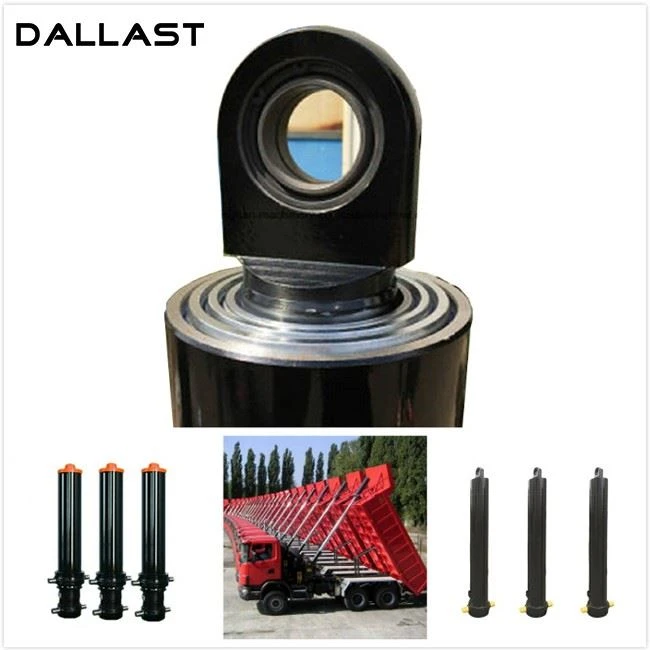

- Customization: We understand that different applications have different requirements. That's why we offer customized telescopic cylinders that can be tailored to specific needs, including stroke length, bore size, and operating pressure.
- Quality Assurance: Our cylinders undergo rigorous quality control tests to ensure that they meet the highest standards. We use advanced manufacturing processes and strict inspection procedures to guarantee the performance and reliability of our products.
- Technical Support: Our team of experienced engineers and technicians is available to provide technical support and assistance to our customers. Whether you need help with installation, maintenance, or troubleshooting, we are here to help.
Contact Us for Procurement
If you are in the market for high - quality telescopic cylinders, we invite you to contact us for procurement. Our team will be happy to discuss your specific requirements and provide you with a detailed quote. We are committed to providing the best products and services to our customers, and we look forward to working with you.
References
- Hydraulic Cylinder Handbook, various authors
- Industrial Hydraulics: Principles and Applications, by Tom Franklin